
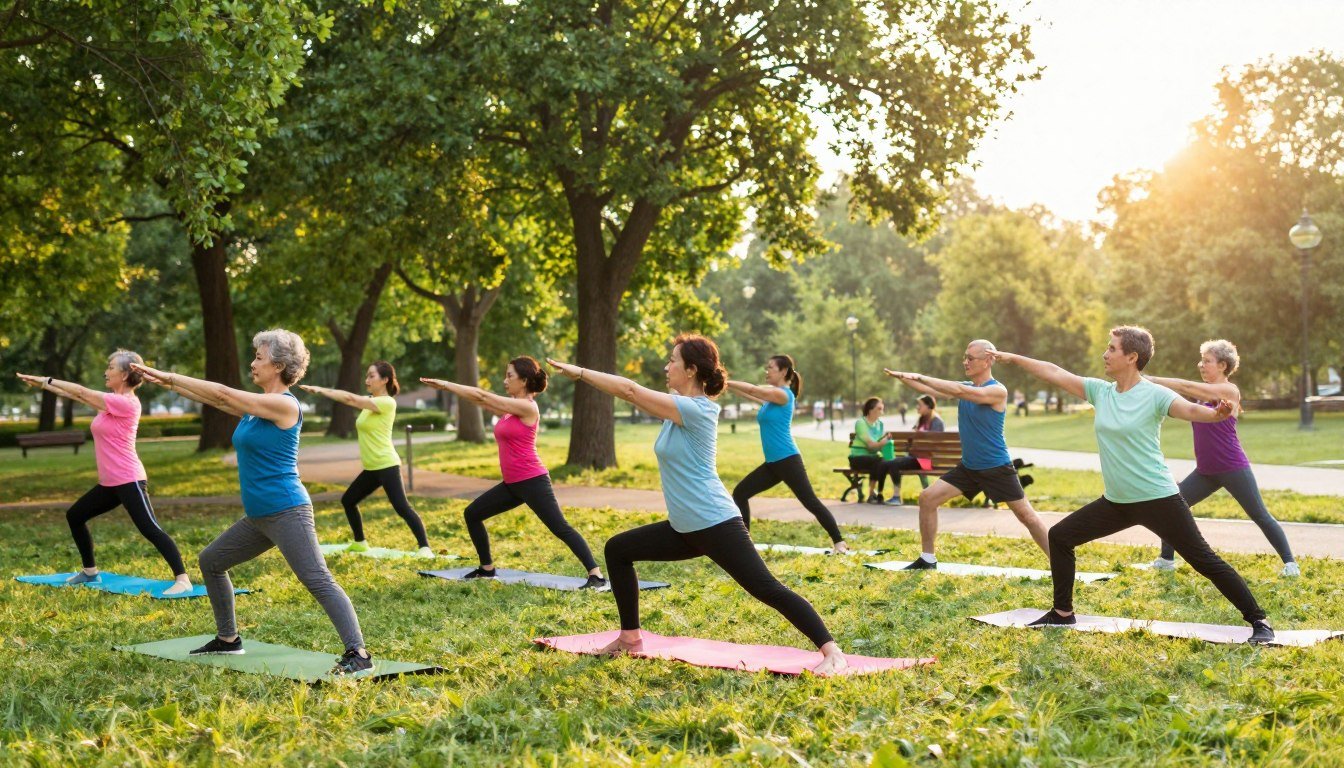
Workout for Adults 40+ to Boost Vitality and Prevent Injury
When I turned 40, I knew my workout plan needed a big change. Keeping my energy up and avoiding injuries was key.
I started looking into exercises made for people my age. I wanted to find vitality exercises that would keep me in shape and healthy. This search has been very enlightening, and I’m eager to share what I’ve learned.
I want to give a detailed guide on workouts for those aged 40 and above. I’ll share my own experiences and tips. My hope is to help others in this age group reach their fitness goals.
The Changing Fitness Landscape After 40
As we hit our 40s, our bodies start to change a lot. These changes can really affect how we exercise. “The decade of our 40s brings about a host of physiological shifts that can impact our exercise regimens,” making it a critical period for reassessing our fitness strategies.
Physiological Changes That Impact Exercise
One big change after 40 is losing muscle mass, known as sarcopenia. This can make us weaker, slower, and gain more fat. Injury prevention exercises are key to keep muscle and bone strong, helping us stay mobile and avoid injuries.
Our metabolism slows down, and fat moves to our bellies. Hormones also change, affecting our energy and how fast we recover. So, we need to adjust our fitness routine for adults to fit these changes.
Common Fitness Misconceptions for Middle-Aged Adults
Many think they must drastically change their workouts or stop doing things they love. But, with the right advice, most can keep doing their favorite activities, just in a way that fits their new body.
Another myth is that only cardio keeps you fit. While it’s important, incorporating strength training is just as critical for keeping muscles and bones healthy. A good fitness plan mixes cardio, strength, and flexibility to keep you fit and prevent injuries.
Experts say a balanced workout program is best for adults over 40. It should include resistance training, cardio, and flexibility exercises. This not only boosts physical health but also helps our mental well-being.
My Personal Fitness Journey After Turning 40
Turning 40 made me rethink my workout plan and focus on my health. I noticed my body was changing, affecting my daily tasks and exercise routine.
Initial Challenges and Setbacks
I struggled with less muscle, reduced flexibility, and longer recovery times. My usual high-intensity workouts were too hard, causing frustration and disappointment.
Finding a Sustainable Approach
I started looking for new ways to stay fit, focusing on strength training for adults. I found exercises that worked many muscles at once were very effective.
This new approach helped me beat my initial challenges. I reached a better fitness level overall.
The Science Behind Effective Workout for Adults Aged 40 Plus to Boost Vitality and Prevent Injury
Research shows that a good workout routine helps middle-aged adults a lot. As we get older, our bodies change in ways that can affect our energy and make injuries more likely. But, with the right exercise, adults over 40 can keep their physical abilities and health in check.
Research on Exercise Benefits for Middle-Aged Adults
Many studies have found that exercise is great for middle-aged adults. The American Heart Association says that regular activity can lower the risk of serious diseases like heart disease and diabetes. It also helps with mental health, making anxiety and depression symptoms less severe.
A study in the Journal of Aging Research found that functional fitness exercises are super helpful for older adults. These exercises improve daily activities and mobility. The study said that they can make physical performance better and lower the chance of falls.
“Exercise is a powerful tool for maintaining health and independence as we age. By incorporating functional fitness exercises into their routine, adults over 40 can significantly improve their overall well-being.”
Key Physiological Factors to Consider
When making a workout plan for adults aged 40 and above, we need to think about a few important things. These include:
- Muscle Mass and Strength: As we age, we lose muscle and strength, a condition called sarcopenia. Resistance training can slow down this loss.
- Bone Density: Osteoporosis is a big worry for many older adults. Exercises that make bones stronger, like weight-bearing and resistance training, can help.
- Flexibility and Mobility: Regular stretching and mobility exercises can make moving easier and reduce stiffness.
- Cardiovascular Health: Aerobic exercise is key for keeping the heart healthy and lowering the risk of heart disease.
By knowing these factors and choosing exercises that target them, adults over 40 can make a workout plan that boosts energy and prevents injuries.
Comprehensive Assessment: Where to Begin
To make a good workout plan, first check your fitness level if you’re over 40. This step is key to making a senior workout program that works well and is safe.
When checking your fitness, look at a few important things. You should think about:
- Cardiovascular health
- Muscle strength and endurance
- Flexibility and mobility
- Balance and coordination
Evaluating Current Fitness Levels
Start by testing your heart health with simple tests like walking a distance or doing a step test. For muscle strength, try squats or push-ups to see how far you can go.
Identifying Physical Limitations and Goals
Then, find out about any physical limits you have. This might include joint problems, chronic conditions, or trouble moving. It’s also important to set clear, reachable goals. These could be to get healthier, move better, or get stronger. Your goals will help shape your wellness activities for adults plan.
When setting your goals, remember a few things:
- Specificity: Clearly state what you want to achieve.
- Measurability: Make your goals something you can measure so you can see how you’re doing.
- Achievability: Make sure your goals are realistic based on your current fitness level.
By following these steps, you can make a workout plan that fits your needs and goals. This will help you on your way to better health and energy.
Core Strength: The Foundation of Injury Prevention
For adults over 40, building a strong core is key. It boosts energy and lowers injury risk. A strong core helps the whole body, making it more stable and improving how well you move.
Exercises for a Stronger Core
There are special exercises for adults over 40 to strengthen their core. These include:
- Planks: Great for building core endurance.
- Bridges: Works the back muscles and glutes.
- Russian twists: Targets the obliques, boosting rotational strength.
- Leg raises: Focuses on the lower abs, essential for core stability.
Proper Form and Technique
It’s vital to do core exercises right to avoid injury and get the best results. Make sure to use your core muscles correctly and don’t strain other parts of your body.
Tips for Proper Form:
- Begin with slow movements and speed up as you get stronger.
- Use controlled breathing to engage your core.
- Don’t arch your back or use momentum, as it can cause strain.
By adding these core exercises to your routine and focusing on the right form, you can boost your fitness. This will also help prevent injuries as you get older.
Functional Strength Training for Everyday Vitality
To stay independent and full of life as we age, we need to focus on exercises that boost functional strength. Functional strength training helps us do daily tasks more easily. It’s key for a good fitness plan for adults over 40.
Compound Movements That Matter
Compound movements work many muscles at once, making workouts more effective and shorter. They’re great for building functional strength because they’re like the actions we do every day.
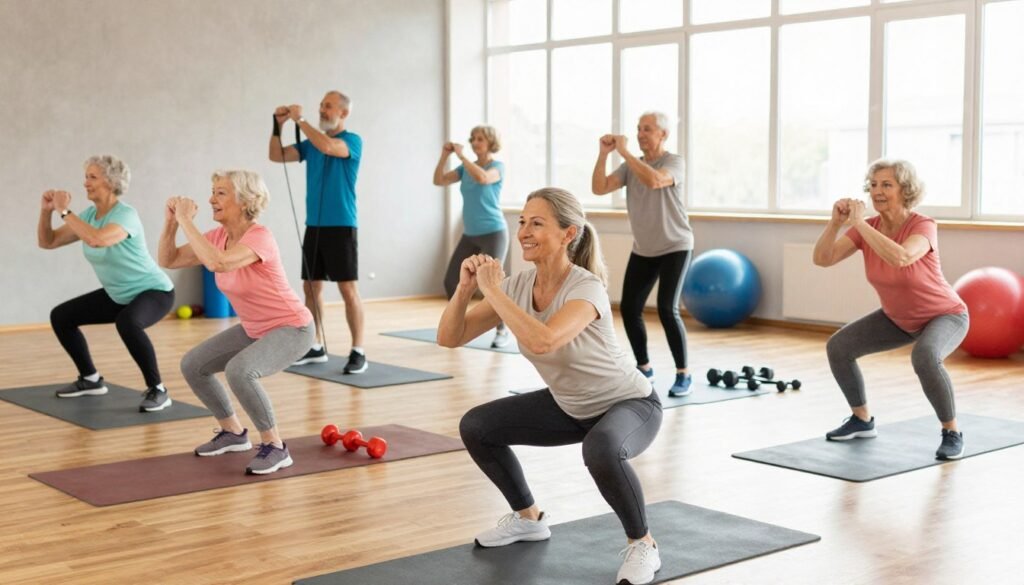
- Squats: Strengthens legs and glutes, essential for standing up from a seated position.
- Deadlifts: Works multiple muscle groups, including back, legs, and core, improving overall strength and stability.
- Bench Press: Enhances chest, shoulder, and tricep strength, aiding in pushing and lifting activities.
- Lunges: Targets legs and glutes, improving balance and coordination.
Adding these compound movements to your routine boosts your functional strength. This makes daily tasks easier and less tiring.
Progressive Resistance Approaches
Progressive resistance training means slowly increasing the weight or resistance in exercises. This keeps muscles challenged and helps build strength. It’s key for keeping and growing functional strength over time.
To use progressive resistance well, start with a weight that lets you do the right number of reps with good form. Then, slowly add more weight as you get stronger. Always aim to challenge your muscles but keep your form right. Watch your progress and change your routine if needed to keep getting stronger.
By using progressive resistance, you can keep getting stronger. This supports your vitality and independence as you get older.
In short, functional strength training is essential for adults over 40. It boosts everyday vitality and makes daily tasks easier. By focusing on compound movements and using progressive resistance, you can greatly improve your functional strength. This supports a healthier, more independent life.
Mobility and Flexibility: Maintaining Range of Motion
After turning 40, it’s key to focus on exercises that boost mobility and flexibility. This helps prevent injuries and boosts your quality of life. As we age, our bodies change, making everyday tasks harder. Adding specific exercises to your routine can help keep or even boost your mobility and flexibility.
Dynamic Stretching Routines
Dynamic stretching moves your joints through a range of motion while keeping muscles active. It’s great before workouts as it gets your muscles ready and can improve performance. Leg swings, arm circles, and torso twists are good examples. Dynamic stretching routines boost flexibility and make muscles more injury-resistant.
To add dynamic stretching to your routine, start with slow, controlled movements. Then, gradually increase speed and range. For example, leg swings can be done by standing with feet hip-width apart and swinging one leg forward and backward. Consistency is key; make dynamic stretching a regular part of your warm-up to see improvements in flexibility and mobility.
Joint Mobility Exercises
Joint mobility exercises aim to improve joint range of motion, reducing stiffness and boosting mobility. They’re great for adults over 40, helping keep joint cartilage and muscles healthy. Knee lifts, ankle rotations, and shoulder rolls are examples.
- Knee lifts: Stand with feet together and lift one knee towards your chest, holding for a few seconds before lowering it.
- Ankle rotations: Sit on the floor with legs straight out and rotate ankles in both directions.
- Shoulder rolls: Stand or sit with arms at sides and roll shoulders forward and backward in a circular motion.
Adding these exercises to your daily routine can greatly improve joint mobility and flexibility. The goal is to keep a full range of motion and lower injury risk, making daily activities easier and less strenuous.
Cardiovascular Training: Heart-Healthy Approaches
Keeping our hearts healthy is essential as we age. Cardiovascular training is key to this goal. In our 40s and beyond, our hearts change, affecting their efficiency. Regular exercise helps improve heart health and vitality.
Low-Impact Cardio Options
For middle-aged adults, low-impact cardio exercises are best. They reduce injury risk while providing a good workout. Examples include:
- Brisk Walking: A simple yet effective way to get your heart rate up and improve cardiovascular health.
- Swimming: A low-impact exercise that’s easy on the joints and can be adapted to various fitness levels.
- Cycling: Whether on a stationary bike or outdoors, cycling is a great way to improve cardiovascular fitness.
These exercises are not only beneficial for heart health but also contribute to overall fitness and well-being.
Interval Training for Maximum Efficiency
Interval training is a highly effective method for improving cardiovascular health. It involves short bursts of high-intensity exercise followed by periods of rest or low-intensity exercise. This approach boosts cardiovascular fitness and enhances metabolic health. It can be adapted to various forms of exercise, such as running, cycling, or even brisk walking.
For example, a simple interval training routine could involve:
- Warm-up: 5 minutes of light cardio.
- High-intensity interval: 1-2 minutes of high-intensity exercise (e.g., sprinting or fast cycling).
- Low-intensity interval: 2-3 minutes of low-intensity exercise (e.g., walking or slow cycling).
- Repeat: Cycle through steps 2 and 3 for 20-30 minutes.
- Cool-down: 5 minutes of stretching.
Interval training is a versatile and efficient way to improve cardiovascular health. It’s an excellent addition to any senior workout program.
Recovery Strategies: The Missing Link for Adults 40+
Recovery strategies are key for adults over 40 to succeed in fitness. As we age, our bodies change, affecting how we recover from exercise. Adding rest periods and active recovery to your plan boosts fitness and lowers injury risk.
Optimal Rest Periods Between Workouts
Getting enough rest between workouts is vital for muscle recovery and growth. Adults over 40 need to balance workout intensity with rest. Studies show 48 to 72 hours of rest between strength training sessions for the same muscle group is beneficial.
- Make sure you sleep 7-9 hours each night.
- Take a deload week every 4-6 weeks to rest your muscles.
- Listen to your body and adjust your workout schedule as needed.
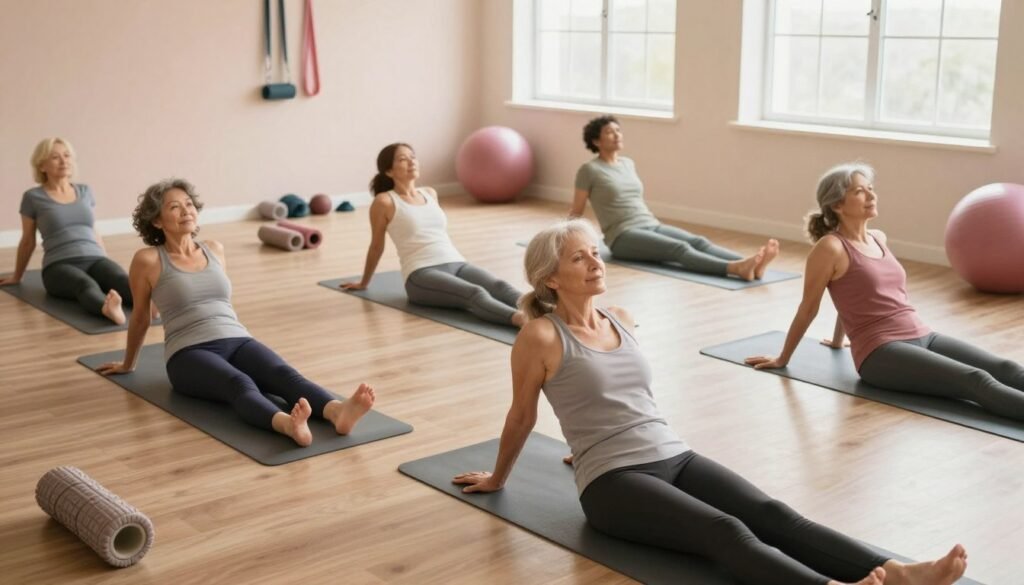
Active Recovery Techniques
Active recovery techniques improve blood flow, reduce muscle soreness, and aid in overall recovery. Some effective methods include:
- Light Cardio: Try low-intensity cardio like cycling or swimming.
- Stretching and Foam Rolling: Regular stretching and foam rolling improve flexibility and reduce muscle tension.
- Yoga and Pilates: These practices enhance flexibility, balance, and core strength.
By adding these recovery strategies to my workout plan, I saw a big improvement in my fitness and less muscle soreness. Prioritizing recovery helps adults over 40 stay consistent with their workouts and reach their fitness goals.
In conclusion, recovery is essential for any workout plan, even more so for adults over 40. Understanding the importance of rest periods and using active recovery techniques can boost your fitness journey and keep you healthy and active.
Nutrition to Support Fitness After 40
As we get older, our diet needs change. It’s key to know how food affects our fitness goals after 40. Eating right supports our health and helps prevent injuries. We’ll look at the nutrients that matter most for adults over 40.
Protein Requirements for Muscle Maintenance
Protein is vital for keeping muscles strong and repairing them. After 40, we naturally lose muscle. Eating enough protein helps slow down this loss. High-quality protein sources like lean meats, fish, eggs, and dairy are important.
The amount of protein we need changes with age. Aim for at least 0.8 grams of protein per kilogram of body weight daily. Some research suggests older adults might need up to 1.2 grams, depending on activity level. Eating protein-rich foods at meals and snacks helps meet these needs.
Anti-Inflammatory Foods for Joint Health
Keeping joints healthy is more important as we age. Anti-inflammatory foods can help with joint pain and inflammation. Omega-3 fatty acids in foods like salmon are great for this. Antioxidants in fruits and veggies also help fight joint inflammation.
Eating a variety of colorful fruits and veggies gives us antioxidants. Berries, leafy greens, and other veggies are full of antioxidants and fiber. Whole grains, nuts, and seeds are also anti-inflammatory and easy to add to meals.
By focusing on these nutrients, adults over 40 can support their fitness goals and stay healthy. A balanced diet, along with exercise, is essential for well-being as we age.
The 12-Week Transformation Program: A Case Study
A 12-week workout plan has greatly improved the fitness of adults over 40. It boosts overall health. The program is flexible, allowing participants to progress safely and at their own speed.
Weekly Progression and Adaptations
The program starts with basic exercises and gradually adds more intensity over 12 weeks. In the first four weeks, it focuses on core exercises and compound movements. As participants get stronger, the program introduces harder exercises to keep muscles growing and improve heart health.
Every week, participants track their progress. They note any improvements in daily tasks and overall well-being. This helps tailor the program and keeps motivation high.
Measurable Results and Outcomes
By the end of 12 weeks, participants see big improvements in strength training for adults. They also notice better mobility and a lower risk of injury. The program’s focus on progressive overload and functional training leads to a clear fitness transformation.
Participants see gains in muscle mass, bone density, and heart health. These changes lead to a better quality of life. They help adults over 40 stay independent and enjoy activities without physical limits.
Common Obstacles and How to Overcome Them
Many adults in their 40s and beyond face big challenges in their fitness journeys. As we get older, obstacles can make it hard to reach our fitness goals. We’ll look at common problems and solutions to help you keep moving forward.
Time Constraints and Scheduling Solutions
Finding time for workouts is a big hurdle. Busy lives make it tough to fit in exercise. Effective time management is key. Look for small moments in your day for exercise, even 20 minutes is good.
To beat time issues, you can:
- Put workouts in your calendar like you would any other important meeting.
- Try shorter, intense workouts that are as good as longer ones.
- Make physical activity part of your daily life, like taking the stairs or walking during lunch.
As fitness expert
“The key is not to find more time, but to make the most of the time you have.”
By making workouts a priority and being flexible, you can keep up with your fitness goals even when life gets busy.
Addressing Plateaus and Motivation Dips
Reaching a plateau or losing motivation can be tough. It’s when progress seems to stop or you lose interest in working out. Recognizing the signs of a plateau is the first step to getting past it.
To tackle plateaus and motivation drops:
- Check your workout routine and make changes if needed, like new exercises or more intensity.
- Set new, reachable goals to boost your motivation and sense of achievement.
- Get support from a workout partner, personal trainer, or fitness group for encouragement and accountability.
By understanding these challenges and using these strategies, you can beat common obstacles and keep improving your fitness. Staying committed and adaptable is key for lasting success in fitness for older adults.
Adapting Your Workout as You Age: 40s, 50s, and Beyond
Staying fit as we age means understanding our body’s changes. Our exercise routines need to adapt with age. This ensures we meet our changing needs and abilities.
Decade-Specific Considerations
Our bodies change with age, affecting our exercise needs. In our 40s, muscle and bone density start to decrease. This makes strength training key.
In our 50s, flexibility and mobility become more important. They help us stay flexible and avoid stiffness.
Key considerations for each decade include:
- In your 40s: Focus on strength training to combat muscle loss and maintain bone density.
- In your 50s: Emphasize flexibility and mobility exercises to preserve range of motion.
- Beyond 60: Prioritize balance and coordination to prevent falls and maintain independence.
Long-Term Progression Strategies
Creating a long-term plan is essential for lasting fitness. This means gradually increasing workout intensity and adding new exercises. It’s also important to have enough rest time. A good senior workout program should be flexible and adjust to your changing needs.
Effective long-term strategies include:
- Progressive overload to continue challenging muscles and promoting strength.
- Incorporating wellness activities for adults, such as yoga or tai chi, to enhance flexibility and balance.
- Regularly reviewing and adjusting the workout routine to accommodate any physical changes or limitations.
By focusing on age-specific fitness and long-term progress, adults can stay active. They can prevent injuries and enjoy life fully as they age.
Conclusion: Embracing Fitness as a Lifelong Journey
Fitness is a lifelong journey, not just a short-term goal. A good workout plan for those over 40 can change the game. It helps keep us vital and injury-free. By taking a sustainable approach to fitness, we can live a healthy and active life.
Understanding the value of fitness in our 40s is key. We need to assess our fitness, know our limits, and set achievable goals. This way, we can make a workout plan that fits our needs perfectly.
On this journey, patience, persistence, and commitment are vital. Seeing fitness as a lifelong path brings many benefits. It improves our physical health and mental well-being. With the right mindset and a solid workout plan, we can excel in our 40s, 50s, and beyond.